
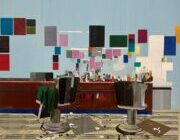
The lifelong, dynamic process by which our identity is shaped, both consciously and unconsciously, is a combination of our genes, internal traits, personal choices, and external environmental factors. Where we are born, grow up, and where we choose to live as adults also factor in heavily. British artist Hurvin Anderson, a Jamaican man born and bred in Handsworth, Birmingham, UK, in 1965, the youngest of eight kids, examines this in the first major exhibition of his stunning work, currently on show at London´s Tate Britain.
Huge colour-drenched landscapes and interiors reflect his life and times spent both in the UK and in the Caribbean. He examines his roots, his experiences of belonging and dispora and questions what this means. This leads us on to question our own journeys. Where do we fit in best? Is there somewhere we haven’t lived that may be the best place for us to live? Does it matter if we don’t really fit in anywhere? Maybe trying to fit in somewhere is just too much pressure.
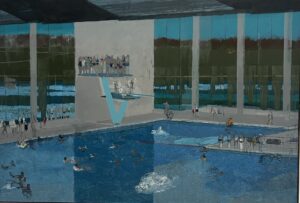
The show details his very personal artistic journey over the past thirty years. His vibrant scenes are fleeting moments of observation, yet are also deep and intense. The viewer stops in their tracks, questions, reflects, and want to know more. Much of his painting is created from photographs. He understands how painting from a photograph can alter its truth. He’s also known for revisiting previous paintings and redoing them from a different, sometimes more-informed, perspective. Which is the most authentic? A photograph of a few of his friends playing in a dull Birmingham park is recreated with paint both realistically and then again as though the park is now in lush, sunny Jamaica.
1970s and 80s Birmingham could be a pretty brutal place – I grew up there then too – but Anderson has the ability to turn what could be quite intimidating scenes of inner-city life when photographed, into kaleidoscopic figurative studies full of colour, heat and calm. The beauty of his work masks a dark side, a loneliness and discomfort amidst the warmth. The acclaimed 1986 film essay, Handsworth Songs by Black Audio Film Collective is screened outside the show. I recommend watching this before you enter, so you can fully contextualise his work. The film highlights the political nature of the pieces – immigration, racism, colonialism, and poverty. It’s intense, and forty years later, we face the same issues.
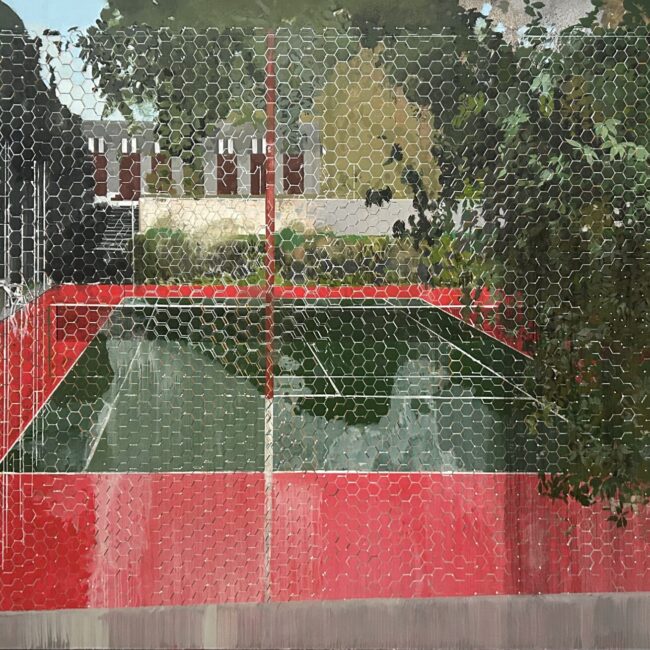
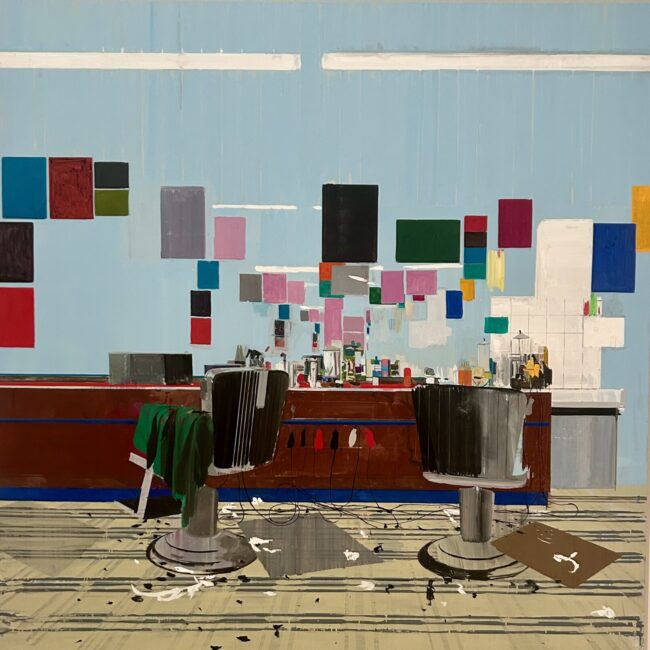
Show favourites include his acclaimed Barbershop series, completed between 2006 – 2023. These highlight the importance to the UK Afro-Caribbean community of the barbershop, a safe space for many men. Other special pieces include work from his time spent in the Caribbean. Country Club: Chicken Wire (2008) shows a view of a smart tennis court, separated from the viewer by a chicken wire fence, depicting the exclusion of locals in Jamaica from high-end tourist facilities. Grace Jones (2020) illustrates a derelict Jamaican hotel, built for white tourists and abandoned, with a lone woman hanging around, who Anderson felt resembled singing legend Grace Jones. It’s both poignant and evocative. Anderson doesn’t answer our questions about identity – are we outsiders or insiders – but perhaps we don’t need to overthink it. We can just admire the work.
A beautiful, unforgettable show at the highest level. 
|
Until 23 August 2026 Tate Britain, Millbank, London SW1P 4RG |
| Queerguru’s Senior Contributing Editor Ris Fatah is a successful fashion/luxury business consultant (when he can be bothered) who divides and wastes his time between London and Ibiza. He is a lover of all things queer, feminist, and human rights in general. @ris.fatah |
