
In the history of developing new drugs for the treatment of AIDS and the still-elusive cure, there has always been the issue of costs. We believe most of the reasons for the high cost are very valid. Pharmaceutical firms spend vast amounts of money discovering, testing, and securing approval for complex antiviral drugs. Plus, newer treatments, such as long-acting injections rather than standard daily pills, cost the developers. Then, like it or not, drug companies own exclusive legal rights to sell their newly invented formulas, meaning no competitor can offer a cheaper version.
In the early 1980s when my husband was diagnosed with HIV, we had the good fortune to be accepted as a patient by Dr Jane Anderson, head of the AIDS Unit at St Barts in London. There were various drugs being used then ….. mainly AZT, which was not only expensive, but high doses of early AZT caused dangerous health issues, including severe muscle loss, liver damage, and low blood cell counts. One of the events that stuck in my mind from that time was the comment from a US doctor at the time who told my American sister-in-law that NOT HAVING TO PAY FOR OUR MEDICATION IN THE UK WOULD PUT AT LEAST A YEAR MORE ON HIS LIFE than those who had to pay for all of them in the States
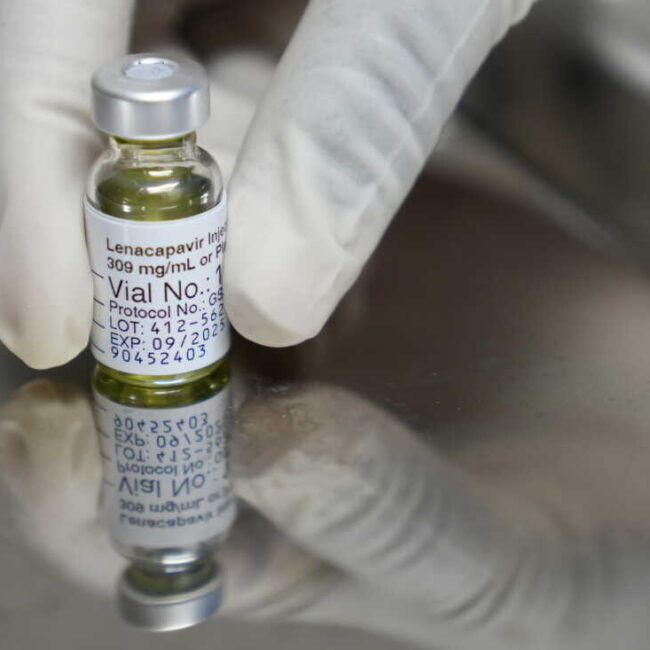
That was then, but this is now and how things have changed. A twice-yearly HIV prevention injection has not been recommended for routine NHS (the British National Health Service). it involves lenacapavir, sold by Gilead under the brand name Yeytugo, which is given every six months to prevent sexually transmitted HIV-1 infection. Dr Cara Saxon, president of BASHH (British Association for Sexual Health and HIV )has said “Lenacapavir could offer protection against HIV for six months from a single injection”
Lenacapavir was approved by the Medicines and Healthcare products Regulatory Agency (MHRA) in December 2025 for adults and adolescents. Treatment involves an injection every six months, alongside tablets when treatment is started
The irony (if that’s the word?) is that the NHS has been advised by a body called NICE (The National Institute for Health and Care Excellence) is an independent public body in the UK that creates rules and advice for health and social care. They have said its cost-effectiveness was above the range considered an acceptable use of NHS resources.
Richard Angell OBE, chief executive of the Terrence Higgins Trust, said he was profoundly disappointed.“Twice-a-year injectable PrEP is the most exciting innovation in HIV prevention for years. But history is repeating itself when it comes to PrEP access in England and Wales – clearly, lessons haven’t been learned,” he added.
We would go further and say that we are positively angry at the whole idea of putting a price on the lives of everyone with HIV in the UK, and beyond
