
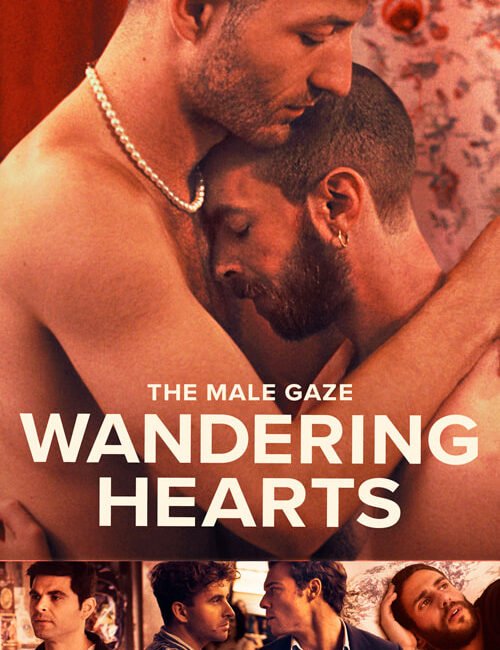
The innovative queer short film series, The Male Gaze, has released its latest selection of short films, Wandering Hearts, featuring six very diverse films from around the world, all featuring queer souls on very personal journeys.
Star of the show is Maghreb´s Hope, a super-interesting documentary about various queer lives in the Maghreb region of North Africa. This covers Tunisia, Morocco, Egypt, Algeria and Libya. More about that in a minute. Other highlights include a French film, Chaud, in which an initially sexy hook-up gets derailed by shyness. This, in turn, leads on to something else. Sunflowers at Night is another French film in which a successful author returns to his hometown to promote his latest book, not realising how much he has changed until he bumps into an old flame. Two Israeli shorts, Assi Doesn’t Live Here and Tshuva, explore different kinds of loss, and there’s also a very cute animated short from Taiwan, Confusion of the Afternoon.
 Back to Maghreb´s Hope. This film is of particular interest to me as we hear so little about North African queer life, so this is a great opportunity to learn from the horse´s mouth, as they say. Director Bassem Ben Brahim´s film follows four young queer people determined to make a difference both for themselves and for other queer people in the region.
We first meet Adam from Algiers. He’s a non-binary queer activist, having been inspired by a childhood of bullying and homophobia. At the age of 19, his boyfriend killed himself, and today he lives under the constant threat of arrest and prison. Nevertheless, he remains strong and in Algeria, pushing for change.
Then we meet Ritej. She’s a gender-fluid bisexual. Abandoned as a baby, she ended up in an orphanage in Libya when her foster parents died. As a young adult, she launched @kun.libya – a queer rights association in Libya. Threats from local authorities and others eventually forced her to flee Libya for the relative safety of nearby Tunisia. There she runs her association with the help of a benefactor from Norway and dreams of moving to the USA.
Next up is Jade, a trans man from Tunisia. Jade wanted to transition quietly in Tunisia but got outed after being spotted at a gay pride march. So he moved to Brazil to complete his transition. There he’s working, claiming asylum and living his best life.
Finally we meet Afef, a trans woman from Morocco. She thought she was gay at sixteen, then began her transition at nineteen with hormones bought at local pharmacies. There is no official help for those seeking to transition in Morocco and she hasn’t had surgery yet. Her mother then found her stash of hormone pills and forbade her from continuing her transition. As she is still living at home, she didn’t feel she had any other choice than to obey her mother’s wishes.
I caught up with Bassem, the Tunisian film director, to find out more about Maghreb’s Hope.
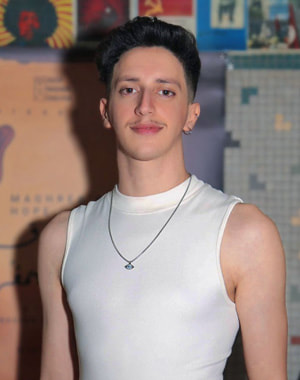 Hi Bassem, firstly, congratulations on Maghreb’s Hope. It’s a powerful and heartfelt documentary, an important piece of filmmaking. What inspired you to create the film?
Actually, Maghreb’s Hope was not originally my personal idea. It was a commissioned film, but it strongly aligned with my artistic practice and my activist approach. I was approached because of the work I have been doing for several years on ongoing projects related to queer realities in the region. The Queer Maghreb Coalition considered that my profile matched what they were looking for: both as an activist and a filmmaker, someone able to move between different contexts. At that point, the film had already been partly shot across several regions of North Africa and in Brazil. I was then invited to join the project, and I accepted to take part in this journey. It became a two-year process of work and collaboration, from 2022 to the end of 2023.
How did you find the contributors?
The contributors were already part of the project before I joined. The Queer Maghreb Coalition had already built relationships and collaborations with them, and everything had been carefully prepared and structured in advance. So I didn’t personally “find” the contributors. I stepped into an existing process that was already in motion. My main responsibility came later, especially in terms of distribution and circulation of the film, which is something I have continued to do until now.
I like your focus on most of the queer people remaining in the Maghreb region rather than leaving to live in other, more queer-friendly countries. How is daily life for queer people in the region? Do you feel safe? Are long-term queer relationships possible? I accept that’s a rather broad question, but any insight you can give is important.
Our lives are warm. We really value our daily life, being surrounded by friends, by people we love and admire. There is a strong sense of care and connection within the queer community, especially during queer events and festivals, which mean a lot to us. But at the same time, in everyday life, queer people can face many difficulties, especially when it comes to work and social safety because of queerphobia. There is always this underlying tension. We also hear about arrests or police interventions – sometimes individuals being arrested, or what happened recently with house parties where many queer people were arrested. These kinds of events bring a lot of stress and make us constantly question our safety, our dignity, and our future. Our lives are still under threat because of laws such as Article 230 and Article 226 bis in Tunisia, and similar legal frameworks exist across most of North Africa and the region in general.
I thought that it was interesting in the film that you say progress across all types of change is very slow in the Maghreb region, let alone queer rights. What do you think is the best way to advance. queer acceptance in the region?
Yes, change is really slow. We often say that things are better now because we have queer festivals, we can organize events, and there is more visibility and space than before. But at the same time, this progress is fragile. A new political shift or movement can quickly create pressure
again, and we risk losing what has been built over the years. For me, the most important step is legal change first—changing the laws that criminalize and put queer people in danger. After that, we can more effectively work on education and cultural change. Of course, I also believe these processes should ideally move in parallel, but without legal protection, everything remains unstable and constantly under threat.
I’d love to know more about how the lives of the films´ participants progress. Any chance of a follow-up documentary, say five years after the initial film?
Sure, I can update you now on each participant .
Adam is the Algerian participant. He was the only one present at the Tunis premiere of the film, since it took place nearby. That was the last time we saw each other in person. He is still in Algeria today. He has not left the country yet and is living and working there.
Ritej is between Libya and Tunisia. As she mentions in the film, she planned to leave Tunisia for the United States—and in fact, before the film was released, she did leave. She is now based in Washington, if I am not mistaken. She continues her activism through her queer platform “KUN,” and she also works as a journalist.
Jade is one of the main protagonists, but I actually knew him before the film project. I had already been developing a long documentary project about him. He appears briefly in the short version of the film at the beginning, and I have been following his journey for about four years now.
He is a trans man who left Tunisia for Brazil. When he arrived there, he was already in the process of settling and applying for asylum. Today, his situation has evolved a lot. He is more stable; he underwent top surgery, and he even won Mister Trans Brasil International. He now speaks Portuguese, and I maintain a very strong connection with him.
Afef is a trans woman from Morocco. She moved from Meknes to another city and continued her transition. She was 19 when we filmed her, and she is around 23 now. She is really becoming the woman she has always been. When I met her again in Morocco, I saw how much she had changed—her hair is longer, her appearance more feminine, and she has become a very mature and confident woman. She is someone very important in my life now. She also followed the screenings of the film in Morocco, especially in queer underground festivals and community spaces. The queer activism scene there is quite strong, and I think her presence in the film helped reflect the realities of trans people in Morocco in a very powerful way.
What advice do you have for queer people in the Maghreb region? Are there cities, regions or countries that are more queer-friendly than others? What are the best websites, social media platforms or organisations for queer people in the region to access?
My advice is: please be careful and try to stay safe, but at the same time live your life. Don’t stay silent about your right to exist, to love, and to do what makes you feel happy and free. I haven’t visited the whole region enough to be able to compare countries or cities in terms of safety or openness. In most places, because queer existence is still criminalized, many of the challenges are similar, so it’s difficult for me to say where things are more open than elsewhere. For resources and platforms, in Tunisia, there is Mwjoudin and Gender Bender MENA, as well as Damj. In Morocco, I can mention Nassawiyat and SAQF. In Egypt, there is Saloon. And there are a lot of other queer ONG and activists in the region.
What are you currently working on/future plans?
I am currently working on my first feature documentary project, Trip to My Body. I am also developing a queer short documentary series, which is still in progress.
Thanks, Bassem. This is all super interesting. It sounds like there is a lot more going on in the region regarding queer life than I expected. Best of luck with it all.
Food for thought indeed. For more information on the Wandering Hearts film collection, go to https://www.nqvmedia.com/the-male-gaze-wandering-hearts.html . The film can be viewed on AMAZON 
|

Leave a Reply