

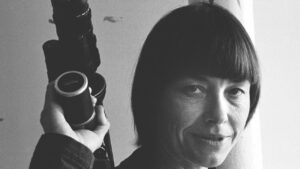
A beautiful, naked, athletic, fifty-something woman strikes various bodybuilder poses with a cheeky glint in her eyes. Barbara Hammer is in control, and she knows how to get your attention. So begins Barbara Forever, a fascinating, intimate portrayal of the pioneering lesbian film-maker, feminist activist, lover, and artist. With an archived collection of over eighty films, plus a treasure trove of memorabilia, director Brydie O’Connor struck gold when she began her research into the life and times of the inimitable lesbian movie queen.
Born in 1939, although in her own words, “I was born when I became a lesbian.” Barbara Hammer felt ignored as a sixties housewife, even though she was living in a creative, bohemian world in the Bay Area of San Francisco. A chance erotic encounter with a woman led to her coming out as a lesbian in 1970, and, noting the media invisibility of lesbians, she declared to redress the balance. Her tools for doing this were photography and filmmaking. The early seventies in and around San Francisco were a bucolic period of the second wave of feminism, and vibrant folk, rock, nudism, poetry, literature, and art scenes. A heady mix. A new culture. A new era. The timing was right. Her 1974 film, Dyketastic, is widely considered the first lesbian film made by a lesbian. Hammer documented her life and those of her friends and associates. As well as increasing the visibility of women, and in particular lesbians, Hammer sought to deconstruct the narratives around the oppression of women. The advantage of there being no history of lesbians in film meant that she had no rules to follow. She could create her own – with fun, sex and community as key parameters.
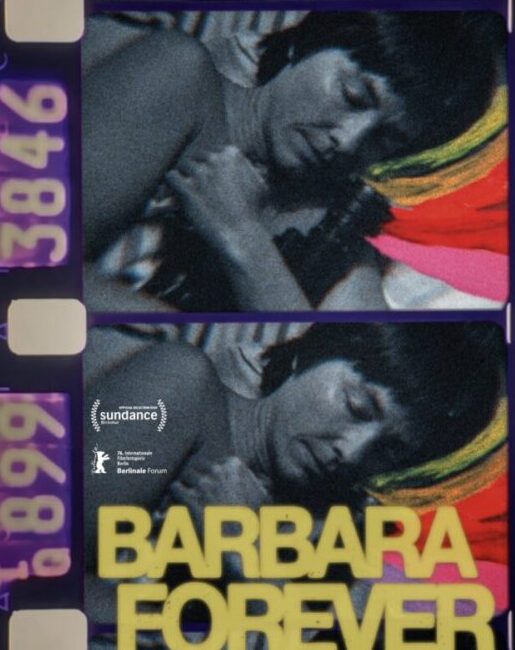
What followed over the next four decades is an amazing body of work that records a remarkable period in lesbian and feminist history. So much so that her archive has been acquired by Yale University. Her film titles include gems such as Sappho, Superdyke, Superdyke meets Madam X, Moon Goddess and Multiple Orgasm. The work included many history-based narratives. She was a pioneer in documenting the intimate details of her life, something very common these days but not done back then. Hammer attributes her need for attention to her mother’s failed attempt to fashion her into the next Shirley Temple. No part of Hammer’s life was out of bounds in her films. All her many lovers, some more willing than others, were recorded on film. Barbara herself is regularly naked in her films, as are her subjects. Hammer remained naked on film until her end of life. When diagnosed with a particularly severe case of ovarian cancer in 2006, she incorporated her treatment into her work. She even filmed herself admitting her mother into a care home. It took time for Hammer to gain industry recognition, and funding was always difficult – the subject matter and content of her films were a bit too much for the staid males in power. She, however, prevailed by being prolific, and for her amazing social archive, we must thank her. Her challenging attitude, risk-taking and bravery have resulted in the visibility of so many previously ignored groups – not just lesbians but also the sick, the elderly, trans people and other disenfranchised minorities, all presented with great aesthetics.
O’Connor has created a fitting tribute to Ms. Hammer. Using archival interviews and footage Barbara Forever is told by Hammer in her own words, alongside contributions from Hammer’s long-term partner, the equally stylish, Florrie Burke. You wouldn’t know that Hammer had died in 2019, she’s very much alive here. O’Connor combines this footage with clips from about fifty of Hammer’s movies, vintage photographs, memorabilia and a beautifully gentle original score combining the harp, cello, clarinet, and flute with other instruments. It’s interesting to see how the conversations around homosexuality within the queer community have become so much more sophisticated and evolved over the past fifty years. Hammer’s filming around her cancer is touching – there are elements of Frida Kahlo and Tracey Emin in how she turned her illness into art. Hammer was keen for her work to remain in the public consciousness after her death, so much so that she allowed the outtakes of her film archive – all kept throughout her life – to be used in new films by filmmakers.
Hammer wanted to exist forever. Barbara Forever will help that happen. 10/10
| Queerguru’s Contributing Editor Ris Fatah is a successful fashion/luxury business consultant (when he can be bothered) who divides and wastes his time between London and Ibiza. He is a lover of all things queer, feminist, and human rights in general. @ris.fatah |
