
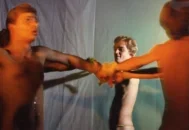
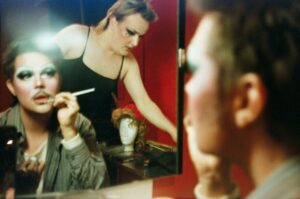
The love for the community and yourself is what makes drag radical
Film was made in loving memory of Reijo Paukku (1942-2026), audiovisual narrative comes and goes from past to present and evolves chronologically, taking us back to 1971 Helsinki, where daytime butcher Raimo Liukkonen – Mummo and archivist Reijo Juha Matti – Jolanda lived their weekend nights intensely, dressing up and transforming themselves into female impersonators and performers.
The documentary skillfully intertwines archival material (footage, vintage photos, magazines, prints) and new digital images and footage of the film in the making, configuring a revelatory portrait of an era (queerness in the second half of the 20th century in Finland) and a moving portrait of the protagonists, particularly Reijo Paukku, so-called the father of Finnish drag and in charge of commanding the first Drag Show in the country, who passed away this year, and “sinful” and sharp Jolanda.
A protagonist of the movement, Jolanda, Juha Matti is a gentleman who likes to drink wine while supervising the documentary’s accuracy, checking for misunderstandings and remembering old times. With grace, he yearns to share how the first drag shows were practiced at friends’ places, underground, even how a basement bomb shelter turned into a place to sing.
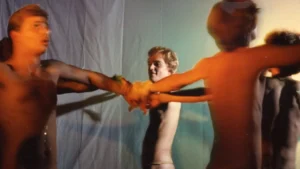 The film brings up, from the late seventies, the Finnish Happy Gays Show at Club Diana, once the hottest thing in town. A film within the film we watch, it also points to the “Hot Stuff,” the most primitive drag show imagined touring Finland. In those days, the group waited for the audience to get drunk and perform; after all, society didn´t accept queers, but they were ok for entertainment.
The interviews with Kaisa Härkönen (Finland’s first drag king) and a member of the company, and Jorna Husu, covergirl and beauty, provide a look back on their lives in the limelight while getting dressed and spraying Chanel No.5, and preparing to lip sync Lloyd Webber-Rice/ Julie Covington´s “Don´t Cry for Me Argentina” and Wagner / Kirsten Flagstad´s Tristan und Isolde Liebestod, among other songs.
The 1980s seemed to bring fresh air and possibilities; 1981 was the year homosexuality was removed from the list of diseases and queer people were allowed to breathe freely. In 1983, the first case of AIDS in Finland was detected; the aftermath was fear all around, to the extreme, to the organization among citizens of the Gay Panic Defense that stated it was OK to kill homosexuals since they were spreading the disease; the same strategy is observed nowadays to kill trans people – Trans Panic Defense.
The documentary refers to things that are well-known within the queer world -but with a Nordic twist- and another of its hits is to feature the glamorous presence of Mummo, a drag performer who became a television celebrity in Finnish households.
Final credits show members of the Happy Gays: Juha-Matti Karhi, Reijo Paukku, Raimo Liukkonen, Kaisa Härkönen, Jorma Husu and Manolo Uriel. LGBTQ pioneers: Erkki-Juhani Jaatinen, Wilma Schlizewski, Outi Lithén, Jussi Nissinen, and performers Joho Marttinen, Ritni Ráste Pieski, Roséta Lundberg, Meeti Assefa, Ville Asikainen and Samuli Emery.
Written and directed by Vesa Kuosmanen. Memories are brought to life by the scents of love (and fear) in this documentary, an approach to Finnish National Queer History.

|
JOSE MAYORGAS : CONTRIBUTING EDITOR. Guatemala, Central America Lawyer and notary public, visual artist, and editor of El Azar Cultural, lives and works in Guatemala City. Cinema lover, curious about the possibilities life brings and eager to live the experience. |

Leave a Reply