
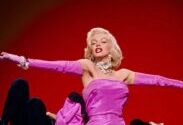
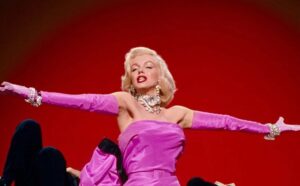
Queerguru’s Senior (polite word for OLD) Editor is getting too obsessed with age, and keeps bringing up significant celebrity birthdays to make him feel better about living life as a Senior. He points out that Dame Shirley Bassey is 89, Dame Vanessa Redgrave is 89, Dame Judi Dench is 91, and Eve Maria Saint is 101 (and the oldest living Oscar winner). However, what we really are all about is joining in the celebrations of what would have been the 100th birthday of the iconic MARILYN MONROE (if she had lived)
Born Norma Jeane Mortenson in Los Angeles on June 1, 1926, Monroe worked as a model and photographer’s subject before signing with 20th Century Fox at age 20, going on to become one of Hollywood’s most recognizable and bankable stars in under a decade. The Film Fiorum in New York are marking the occasion with a 13-film series that charts the full arc of her brief but indelible career: the fizzy comic perfection of GENTLEMEN PREFER BLONDES, HOW TO MARRY A MILLIONAIRE, and MONKEY BUSINESS; gritty noir thrillers NIAGARA, CLASH BY NIGHT, and THE ASPHALT JUNGLE (her first major role, under John Huston — who would also direct her last); and Billy Wilder masterworks THE SEVEN YEAR ITCH (featuring the iconic subway grate dress scene that became one of pop culture’s most immortal images) and SOME LIKE IT HOT; and her final completed film, THE MISFITS. Marilyn died in 1962 at just 36, leaving behind a remarkable filmography that defined Hollywood stardom. 
|
MARILYN 100. Friday, May 29 – Thursday, June 11th This series charts the full arc of her brief but indelible career: the fizzy comic perfection of GENTLEMEN PREFER BLONDES, HOW TO MARRY A MILLIONAIRE, and MONKEY BUSINESS; gritty noir thrillers NIAGARA, CLASH BY NIGHT, and THE ASPHALT JUNGLE THE SEVEN YEAR ITCH and SOME LIKE IT HOT; and her final completed film, THE MISFITS. Marilyn died in 1962 at just 36, leaving behind a remarkable filmography that defined Hollywood stardom. Programmed by Bruce Goldstein Presented with support from The Robert Jolin Osborne Fund for American Classic Cinema of the 1930s, ’40s, and ’50s and The Ada Katz Fund for Literature in Film |

Comments
One response to “MARILYN AT 100 : NY’s Film Forum Celebrates with a Series of some of her finest movies”
It would be great if the was a Marilyn Monroe celebration in Provincetown.