
Even at the risk of repeating ourselves (!) its so important to us that Queerquru continues to report and comment on the current US Administration’s efforts to get rid of gender identity and sexual orientation data elements from over 360 data collections over the last year.
The Orange Man has not hesitated with these plans, and in fact, on the first day of his second term, he signed an executive order making it the government’s policy to recognize only two sexes — something experts say is inaccurate and leaves out transgender, nonbinary and intersex Americans — and setting out a slew of associated policy changes. Among them were directions for government agencies to offer only “male” and “female” options on government forms requiring information about sex.
Since then, agencies have deleted gender identity and sexual orientation data elements from over 360 data collections, the reports found. Researchers say this is likely a conservative estimate that will grow.
The Department of Health and Human Services’ Family and Youth Services Bureau, for example, got rid of both sexual orientation and gender identity elements from its runaway and homeless youth management system, meant to document who the government is serving with community-based programs meant to support homeless young people.
LGBTQ youth are overrepresented among the homeless population. Up to 40% of homeless young people are in the LGBTQ community, according to the National Coalition for the Homeless, meaning that the removal of associated data could make it more difficult to understand if government programs are working to help an especially vulnerable population.
Most of the removals of gender identity or sexual orientation measures were from data collections like the homeless youth survey, designed to see how well a government program is working.
Other changes have removed the ability for people to report that they were experiencing harassment, discrimination or bias based on their sexual orientation or gender identity, said Caroline Medina, senior advisor for data policy at Movement Advancement Project, a nonprofit think tank focused on LGBTQ issues. Sexual orientation or gender identity was removed from bias motivation questions in 23 different government information collections, according to the Williams Institute.
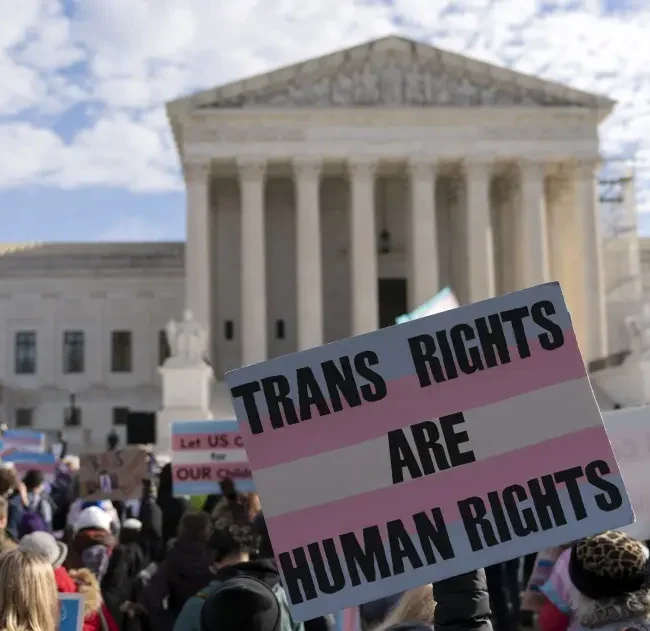
The targeting of LGBTQ data aligns with the administration’s broader anti-trans agenda. The administration has also required passports to show an applicant’s sex assigned at birth, took away an “X” nonbinary option for sex on passports, banned transgender people from the military and more. References to LGBTQ people have also been removed from many government websites.
“We’ve seen drastic policy changes impacting LGBT communities over the last year,” said Medina. “Removing data just makes it harder to observe the harms of those policies.”
The Centers for Disease Control and Prevention removed a gender identity measure, giving those reporting the ability to identify the victim as transgender from its National Violent Death Reporting System, a surveillance system that tracks violent deaths to inform prevention efforts. Gender identity had been in the system since 2013. Transgender people are over four times more likely than cisgender people to be the victims of violent crime, according to the Williams Institute.
The changes to LGBTQ data are one example of a broader breakdown in how the government is collecting and using data, said Medina, pointing to how the Trump administration and its Department of Government Efficiency have been tapping into government datasets maintained for unrelated purposes and using them for immigration enforcement.
| Of all of the Orange Man’s policy changes so far that are impacting government data, his day-one executive order on “gender ideology” has resulted in the most formal changes to information collections at agencies, according to the Data Index, a collaborative effort that’s tracking changes to government datasets. His targeting of diversity, equity and inclusion efforts yielded the second-highest number of changes. |
