

In 2022 Cuba passed a new Family Code a sweeping, progressive law that marked an important turning point in the country.The previous family code, adopted in 1975, only recognized families and marriages between a man and a woman, ignoring many realities of contemporary Cuban domestic relations. For example, in the past, homosexuality was criminalized and prosecuted. Although same-sex relations were legalized in 1979, it was only in 2022 that same-sex marriage and families were recognized.
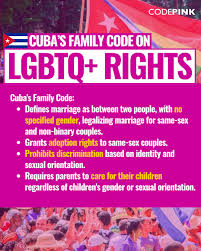 The new Cuban Family Code (Código de las Familias or Law 156 of 2022) replaced the previous family law and broadened the concept of the traditional nuclear family to acknowledge the diversity of Cuban families. Law 156 recognized a wide range of rights for children, women, LGBTQI+ groups, the elderly, and people with disabilities. For example, the code affords the right of all persons to form and organize a family according to their choice. It legalized gestational surrogacy, same-sex marriage, and adoption. It also emphasized the concept of “parental responsibility” instead of “parental custody,” focusing on guaranteeing the best interests of the child. Parental rights were extended to non-traditional family structures, which means, for instance, that grandparents and stepparents can also take care of minors.
That same year Scottish filmmaker Angus Reid, together with Cuban filmmaker, Hugo Rivalta took two cameras to record a first impression of the island. and recorded the referendum on the Family Code, which would decide what constitutes the definition of a ‘family’. This short film documents both that moment of change and, on the day of the vote, the workings of Cuban democracy itself.
Having watched the film, LGBTQ+ and human rights activist Peter Tatchell interviewed the filmmaker and offered his own thoughts on what the referendum means on a global level.
P.S. Although many were in support of the reforms, some LGBTQI+ groups criticized the referendum as a proxy approval mechanism for LGBTQI+ people’s rights. They argued that the rights of minorities and vulnerable groups should not be subject to a popular vote since it exposes them to public scrutiny and discrimination. Opposing views were also expressed by conservative and religious groups, such as the Catholic and Evangelical churches. Some groups argued that the referendum was a smokescreen for repression and human rights violations by the government. The code was approved amid a financial crisis and growing demands for freedoms, rights, political and social transformations. In 2021, massive anti-government protests spread throughout the island.
The full impact of the passing of the Family Code has yet to be determined as the law is new. However, after the law’s approval, there was an increase in lawsuits before the courts in matters related to divorce, alimony, child custody, and care, with more than 34,000 cases were submitted in 2022. Additionally, 513 same-sex couples got married in the country by March 2023. LGBTQI+ groups stated that access to equal marriage improved their lives. The law is expected to contribute to penalizing domestic abusers and grant parental responsibility to grandparents, which is crucial given that many parents migrate and leave their children in the country with their own parents.
