
Our inbox has recently seen a whole flurry of music biopics/documentaries:Janis Ian: Breaking Silence, Springsteen: Deliver Me From Nowhere, Diane Warren : Relentless, A Very Jonas Christmas Movie, David Bowie – The Final Act, etc., etc., and now the latest one is on TAKE THAT, the 90’s Boy Band. A new three-part documentary on Netflix has both familiar footage from that time but also previously unseen video and the most haunting thing that strikes you is how very, very young the Boys were at the time …. or at least acted like they were.
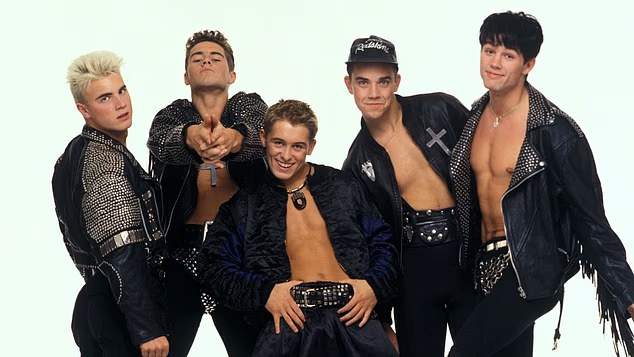 On the plus side we see how these 5 young total strangers very quickly became fast friends. They had all answered an advert posted by Manchester-based impresario Nigel Martin-Smith, who had the ambition of making a British version of US boyband New Kids On The Block. His vision was that the band would ‘break’ on the gay scene, but one day they were booked to play a concert for young teens and were mobbed by screaming just-adolescent girls. It was a ‘eureka’ moment.
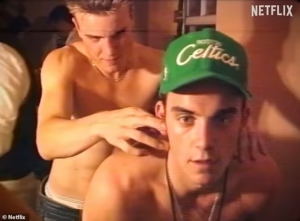 Filmmaker David Soutar does a great job in revealing quite intimate and personal details about all the band members. Gary Barlow opens up about his years of binge eating, which led to bulimia, as he tried to ‘kill the pop star’ ; Howard reveals that, at his lowest ebb, after the band broke up in 1996 when he was still only 27, he drove down to the Thames with the intention of killing himself. ‘Robbie was in the grip of something,’ says Howard. ‘On stage, he had these bulbous eyes and energy. It did look like he was on something.’ Still, his
  leaving in July 1995, at just 21, was a shock. Gary and Mark recall that during a meeting prior to the tour, Robbie was told he should ‘pick it up’ – and Robbie said in that case, he was off.
Robbie has said he was already a ‘raging alcoholic’ at 19 or 20 and couldn’t start the day without a bottle of vodka. The band went on without him, but at a press conference in February 1996, they announced that the rumours were true: they had decided to break up after an incredibly successful period in which they had sold 20 million albums.
There is more music in this slickly produced three-parter than in most boyband-era documentaries, and it’s all the better for that.
