

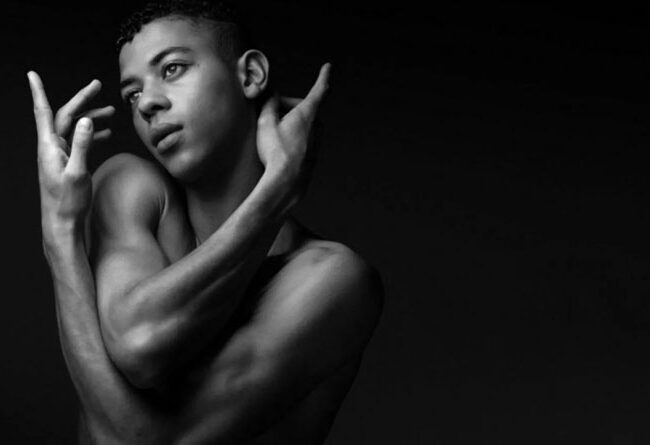
Classical ballet is rooted in the culture of the past and still carries with it the prejudices of old white European colonialism.
Only in recent years have Black dancers begun to gain access to this exclusive world. Even now, traditionalists cling to an all-white cast, arguing for supposed aesthetic purity, homogeneity, and pointing to the technical limitations of Black bodies.
A watershed moment came in March 2023 when the Paris Opera Ballet named Guillaume Diop—a young, mixed-race dancer—“Danseur Étoile,” or Star Dancer.
Just three years previously, Guillaume, along with three other Black members of the corps de ballet, had released a manifesto challenging the latent racism in the company’s practices. The manifesto sparked fierce debate, drawing even further racist backlash from some traditionalists.
Virginia Plaut and Youcef Khemane’s important documentary follows Guillaume for a year after his historical achievement, highlighting the challenges of his new status as a role model and a symbol of change.
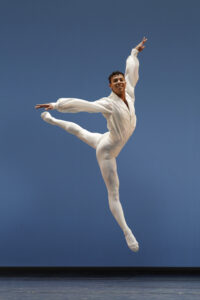 We witness him in rehearsals for The Nutcracker, hear him encouraging young people in Paris and on an official trip to French Guyana, and most movingly, share in a family gathering, where we learn of his difficult path to success. Not only did his parents have doubts about his career, but the experience of ballet school was traumatising for him. His six month break at the African American, Ailey Dance School in New York, was essential in restoring his health and confidence.
Guillaume’s personal story is interspersed with compelling footage of high level board meetings at the Opera, where diversity is discussed openly, by a mainly white panel, men on one side of the table, women on the other. We learn in detail about the outdated body aesthetics of ballet and the pitfalls of positive discrimination.
Black male dancers are becoming more common because of their strong physical presence, but very few Black female dancers can be seen in ballet companies, through their assumed inability to follow prescribed postures and dance “en pointe.” When Black dancers are promoted, even they wonder if they merit their elevated positions.
Still, I was persuaded that the women at the table at least, were committed to making more than cosmetic changes to the institution and had the dancers’ wellbeing in mind. What ballet needs to address next are gender differences and the toxic physical and mental pressures put on young dancers in training.
One of the most celebratory and poignant sequences comes near the end of the film. It shows Guillaume’s hairdresser braiding cornrows for his Nutcracker role—he will be the first dancer to wear this traditional African style on the Paris Opera stage.
The film concludes with his electrifying performance in The Nutcracker.
Unfortunately, I was frustrated by the constant American voiceovers which unlike subtitles, obscured the original French dialogue and negated the personalities of the participants. I also found the side plot of Sullivan Loiseau, a young woman from Martinique and the first Black cellist in the Paris Opera Orchestra, underdeveloped and distracting from the main arc of Guillaume’s story.
Still, this is a fascinating documentary and essential viewing for ballet lovers. 7/10
| streaming online https://icarusfilms.com/if-young |
| Queerguru Contributing Editor Robert Malcolm is a trained architect and interior designer who relocated from London to his home town of Edinburgh in 2019. Under the pen name of Bobby Burns he had his first novel, a gay erotic thriller called Bone Island published by Homofactus Press in 2011. |
