
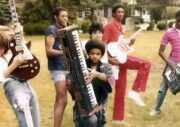
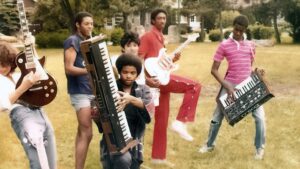
Move Ya Body: The Birth of House traces the evolution of House music through the eyes of one of its creators, Chicago native Vince Lawrence, founder of Trax Records and creator of the first house track launched, Z Factor’s 1984 Fantasy. Director Elegance Bratton has created a gem of a music documentary. Part social history lesson, part biography and part music chronicle, Move Ya Body: The Birth of House begins with the incubation of house music – disco.
Chicago in the 1970s was very racially segregated. The Black, Jewish, Italian, Irish, Puerto Rican, and Polish communities largely lived in separate areas, and it was official government policy to have tougher mortgage restrictions in predominantly Black areas like Southside, reducing home ownership and security for that community. Tensions were high, as was crime and injustice, but an escape through music and dancing was possible.
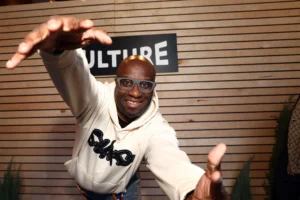 Born in Chicago in 1964, Vince Lawrence got into music at an early age. He was inspired by the iconic TV show Soul Train, the radio and record pools, as well as his father, who introduced him to disco in the 1970s. He became aware of civil rights through music. Disco gave black and queer people a voice and a stage, and safe spaces to meet, including Chicago’s legendary Warehouse club, where Frankie Knuckles ruled the roost. By the late 1970s the nerdy teenager was saving up for a synthesizer to create his own narrative. At this point we were at peak disco, and a backlash to the increasingly commercial chart-topping genre was inevitable. The new wave, rock and two-tone scenes felt fresher and more relevant to many, including myself. The decline of disco peaked in 1979 with Disco Sucks, a protest movement and slogan from 1979, most famously represented by Disco Demolition Night, a riotous event at a Chicago baseball stadium where thousands of disco records were destroyed. The movement was driven by white rock fans who felt threatened by disco. but critics argue it also had racist and homophobic undertones because disco was closely associated with Black, Latino, and queer communities.
Fifteen-year-old Vince Lawrence was working at the stadium the night of the riot and was violently racially assaulted on his way home. One of the perpetrators was a cop’s son, and in return for suppressing legal action, Lawrence agreed to accept $800 in compensation. This meant he could finally afford the synthesizer he had been saving for. Vince started creating music and, in the early 80s, began promoting parties for fellow students at high schools in Southside. Fellow DJs at these parties included Larry Levan and Marshall Jefferson. The music and party scene grew quickly and out of the embers of disco came house and hip hop. The hip hop scene was largely macho and heterosexual but house welcomed everyone and clubs like Music Box and Powerplant were packed. The look was often quite preppy with Izod or Lacoste polo shirts the uniform of the time.
Vince formed a band, Z Factor, with musician/DJ Jesse Saunders, and they released the first house single in 1984, with guest vocalist Rachel Kane. Kane was perhaps an unlikely choice for vocalist, being a white, blonde New Yorker, but the US was in the midst of a Blondie Eat to the Beat frenzy, so the choice makes sense. Vince promoted the single himself in bars, clubs, and on the radio, and it was soon picked up on by Frankie Knuckles and Farley Jackmaster Funk. Vince and Jesse teamed up with dodgy Larry Sherman, a local record manufacturer, to make the vinyl, which was made on old ground-down 78s. The legendary Trax Records was born. Everything was done on the smallest of budgets, but word spread fast, especially to New York and all over the UK, and the phenomenon that is house music was set free. Vince then signed to Geffen Records, and then Mute in the UK, but neither label had a clear roadmap for him, and the founder of house music never made a fortune from it. The pioneers get shot, as they say.
Bratton combines great interviews, archive footage and photography, fab 80s music videos and recreated club scenes to tell this thought-provoking story, warts and all. Lawrence is a very charming, humble interviewee. Other interviewees include the fabulous Captain Sky, Kevin Aviance, Rachel Kane and Marshall Jefferson. The brutal racial history of 70s Chicago is examined in detail, as it the whole Disco Sucks movement, both contributing indirectly to the launch of house music. The footage of the Disco Sucks riot feels like a Trump rally, showing that, in the past fifty years, the underbelly of America hasn’t changed in how easy it is to lead. Interestingly, this film is executive-produced by Hillary and Chelsea Clinton. In an era of a rather sanitised, commercial music scene, this doc is an important nod to where we came from, as well as a reminder of the role queer people of colour played in the creation of house music. An unmissable thrill. 10/10
| Queerguru’s Contributing Editor Ris Fatah is a successful fashion/luxury business consultant (when he can be bothered) who divides and wastes his time between London and Ibiza. He is a lover of all things queer, feminist, and human rights in general. @ris.fatah |
