
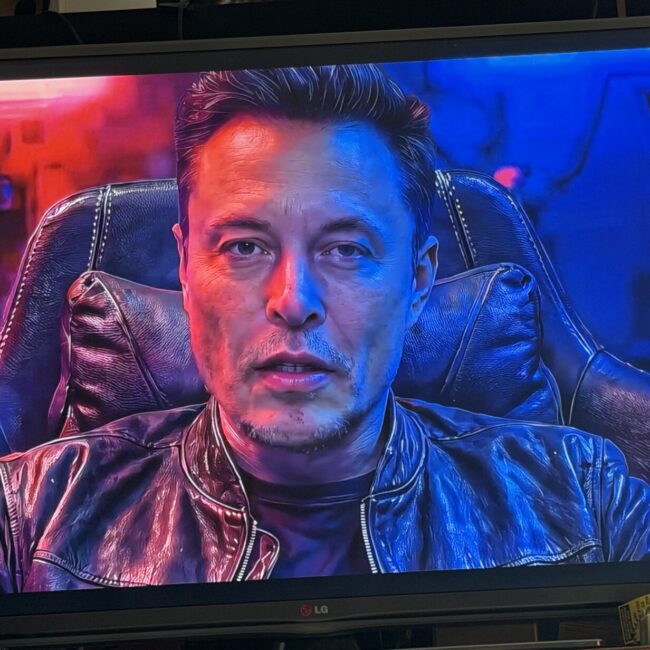
It takes a brave, fearless filmmaker to take on the world’s wealthiest megalomaniac, so doff your cap to American filmmaker Alex Gibney and his portrait of Elon Musk. Filming began in 2023, with production on hold before Gibney returned to the project. The midterm election of Nov. 2026 is referenced, although Musk’s pumping of close to $500 million into this election, which failed to sway most Americans toward Donald Trump, is not included, although it hangs over the film’s conclusion.
Gibney’s portrait is almost entirely built from published images and words, including A1-generated interviews after Musk rebuked Gibney. The documentary opens with Musk’s fascination with over 50 years of changing video games, which clearly impacted his life visually and emotionally, influencing the development of Tesla cars, SpaceX, colonization of Mars, and Starlink.
The portrait is divided into chapter headings that include “Origin Story,” “Dark Maga,” and “Hardcore,” with a 10-minute intermission providing viewers with a breather from the densely rich film portrait. In one of the camcorder home movies depicting a violent teenage upbringing in South Africa, there is a reference to Musk playing video games to “calm demons of the mind.” It is a possible revelatory Orson Welles’ Citizen Kane/Rosebud moment at the heart of the film as Gibney looks for and finds multiple factual ways to explore the private dynamic of a larger-than-life public figure.
 Gibney succeeds because this documentary, built from vast amounts of detail, deserves an epic approach to capture multiple layers of information, including his relationship with another narcissistic megalomaniac, Donald Trump. Musk’s private life is placed in the middle of the film, exploring his attitudes towards the women in his life as well as his disowning of his trans daughter, Vivian Jenna Wilson, which taps into unhealthy relationships with women in general.
The film demands more in-depth coverage than is possible here, and it may be Gibney’s finest film so far. The use of film clips is remarkable. Reference to the H G Wells film The Man Who Could Work Miracles is returned to twice as Gibney finds increased resonance within this 1936 sci fi fantasy about imagined power.
In another sequence, Musk interrogates the idea that there is value to the concept of empathy towards others. Gibney ends the portrait with Musk being asked a profound philosophical question by an interviewer. This is met with strange blank silence as Musk struggles to find any meaningful words with which to respond. It is a revealing coda to a portrait of Musk, posing the question of whether so much power and money invested in one person could enrich humanity and enlighten the world we all live in.
The answer is deeply disturbing. Gibney’s film should be studied and screened in the years to come as a warning, calling into account the ways powerful men aim to dismantle political regulations to bring about the destruction of the world as we know it
|
PETER HERBERT : CONTRIBUTOR LONDON. He is Curator Manager of The Arts Project supporting a wide range of artists linked to The Arts Project and London’s legendary LGBT+ Loudest Whispers Arts exhibition. He writes about a wide range of film and enjoys the scope of QueerGuru to spread the world of queer and LGBT+ arts. Peter also enjoys hanging out with his loving husband, family, and friends on a sun-facing terrace near Chalk Farm, filled with metal and plastic action men bursting into life while enjoying the forces of nature. |
.

Leave a Reply