
 Reprinted from www.medium.com
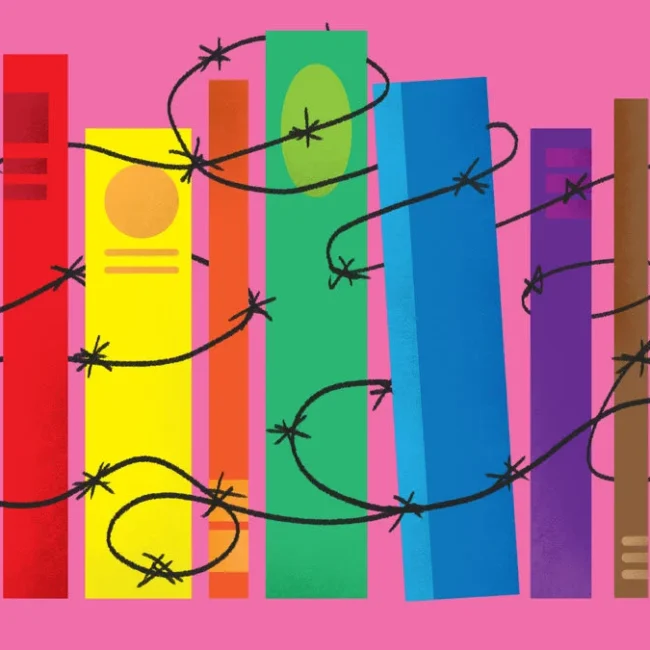
As an LGBTQIA+ journalist, book-banning is nothing new to me; I’ve covered the topic extensively, interviewing authors and organisations like PEN America about how book-banning affects the LGBTQIA+ community and the campaigns to protect books against censorship.
Throughout my writing, however, there’s always been one thing in common. The epidemic of book-banning has touched libraries and schools in predominantly Republican states in the US. According to PEN America, in the 2024–2025 school year there were 6,870 instances of book bans affecting nearly 4,000 unique titles across the US, and since 2021, the organisation has documented nearly 23,000 book bans in public schools. Queer authors have spoken out about the fact that their books, and any books containing LGBTQIA+ content or characters, are more likely to be affected, with Gender Queer author Maia Kobabe writing that book bans “especially impact the readers in a community who are already marginalized”.
From my home desk in London, UK, I safely campaigned against this LGBTQIA+ censorship, thankful that the chances of sweeping book bans taking hold in the libraries and schools near me felt infinitesimally small.
It has become clear, however, that we in the UK cannot keep ignoring what is becoming an epidemic of book-banning and anti-LGBTQIA+ censorship in our country as well as the US, with library staff in Essex County Council being told to “scale back” their support for Pride just this month.
In a briefing, library staff were reportedly told not to promote any events at the county’s 74 libraries that were not related to their day-to-day activities, the BBC reported. This includes Pride events, with Reform councillor Chris Hossack claiming libraries remain “spaces for everybody”.
“We need to be careful not to highlight any particular groups or themes, so, mindful of this, and unless the activity is specific to libraries, we have taken a decision to pause promotion of such events at libraries via the council’s public-facing communication channels, including social media,” Hossack claimed.
A council leader in Merseyside, George Woodward, said it even blunter as he called on libraries to remove Pride displays: “We don’t consider celebrations of sexuality, especially those with left-wing political leanings such as Pride, to be appropriate for the council to dedicate valuable officer resources.”
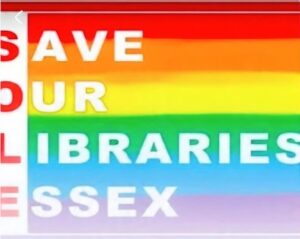
Save Our Libraries Essex described the news as “disturbing and alarming”, adding: “We see all sorts of other community events and organisations rightly promoted in our libraries. So what possible reason is there not to display Pride promotional material — it’s not as if it’s costing the library service anything.”
“Public libraries offer information for all, and should never allow politicians’ prejudices to limit their services,” the group added.
The cancelling of Pride events seen in Reform-led councils across the UK comes after a report in 2024 found that British libraries and schools have been hiding or removing LGBTQIA+ books from shelves after complaints from parents. The investigation by Index on Censorship found that 53% of UK school librarians had been asked to remove literature, and in more than half of those cases, books were taken off shelves.
“We don’t really have anything with teeth to help defend school librarians, their collections and their students.”
“Pretty much every librarian I’ve spoken with says this is more of an issue than it was five years ago, and they’re concerned about it in a way they never had to think about it before,” librarian Alice Leggatt told The Independent in 2024. “We don’t really have anything with teeth to help defend school librarians, their collections and their students when these things happen.”
Another librarian contacted about the research said she felt frightened and intimidated after one complaint led to a purge of all LGBTQIA+ content from her library.
While the slow increase of book-banning and halting of Pride events at libraries represents a terrifying backslide in LGBTQIA+ rights in the UK, book-banning and LGBTQIA+ censorship is far from a new issue in this country.
One of the most well-known cases of an LGBTQIA+ book being banned for “obscenity” in the UK is Radclyffe Hall’s novel The Well of Loneliness, published in 1928.
The novel, which despite its “obscene” classification never goes much further than describing a kiss on the lips, follows the life of Stephen Gordon, an upper-class “butch” or “masc” lesbian who meets and falls in love with a woman called Mary Llewellyn while Gordon is serving as an ambulance driver during the First World War.
The novel, although not particularly sexually explicit, does clearly call for queer equality, with the protagonist pleading for people to “rise up and defend us. Acknowledge us, oh God, before the whole world. Give us also the right to our existence!” After James Douglas, then-editor of The Sunday Express, waged a campaign to characterise the novel as “obscene”, the book faced a legal battle resulting in it being banned in the UK until 1949, six years after the author’s death.
Thousands of women protested the book’s ban at the time, including one who wrote: “It has made me want to live and to go on… I discovered myself in Paris and I dreaded this thing which I thought abnormal.”
Ahead of the obscenity trial in November 1928, Hall defended herself vigorously in the press, claiming she was “proud and happy to have taken up my pen in defence of the persecuted”. After the verdict was reached and an appeal the month after failed, however, she wrote that it was “the end” for the campaign to save her book from being banned, with all British copies of the book destroyed.
Decades after Hall’s book was banned came Section 28, a law brought in by then-prime minister Margaret Thatcher that lasted from 1988 to 2003, when I was 11 years old.
While the law was vague and difficult to put into practice, it essentially banned the “promotion” of homosexuality by local authorities and in Britain’s schools, meaning children growing up during that era were often unable to read or learn about themselves at school, growing up in a confusing and shame-filled vacuum.
Often, libraries and schools during this time kept LGBTQIA+ literature off the shelves entirely, the law meant teachers couldn’t come out as gay — and could be fired if they did — and I didn’t read a single book with an out LGBTQIA+ character in it until I was about 17. It was as if a thick, black blanket was thrown over my head when I was a child. My teenage and young adult years were spent trying to lift it off, only for it to fall down over and over again.
Section 28 was repealed two decades ago, and although I was young when the law was struck down, its legacy bled into the years that followed, leaving deep scars for queer British teens.
Decades later, homophobia and transphobia is ramping up at a scary speed in the UK, with young trans people cut off from vital medical care, and hate crimes increasing year-on-year, as well as Pride coming under fire by Reform. The last thing young LGBTQIA+ people need right now is to grow up in the silence that I grew up in, unable to connect with literature that makes them feel seen and validated. Luckily, teenagers and young people have the internet and inclusive TV shows to help them connect with their community, but we cannot afford to cut them off from books and Pride events due to bigoted politicians when they need it most.
We can never go back, and we will not be silenced again.
There’s no right answer when it comes to resisting the efforts of Reform dragging us back into the oppressive era of Section 28 — whether that’s emailing your MP, signing a petition, or protesting the move — but what’s clear is that we can never go back, and we will not be silenced again.
Emily Chudy is a writer and journalist from London. She has been published in The Independent, Slate, Glamour Magazine, The Big Issue, and more.
