
Since the late Sir Terence Conran established The Design Museum in London some 30 years ago, it’s been one of Queerguru’s very favorite Museums ever. Set up to promote awareness of design in education, industry, commerce and culture, it still continues to promote design in all its forms, striving to make the impact of design visible to all.
The sheer diversity of the exhibitions never ceases to amaze. Currently it’s home to Wes Anderson: The Archives in this first retrospective exhibition devoted to his distinctive cinematic output, produced in collaboration with la Cinémathèque française. But it’s another major exhibit currently on display that had us trekking to London’s South Bank this time.
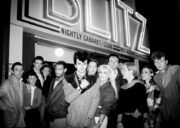
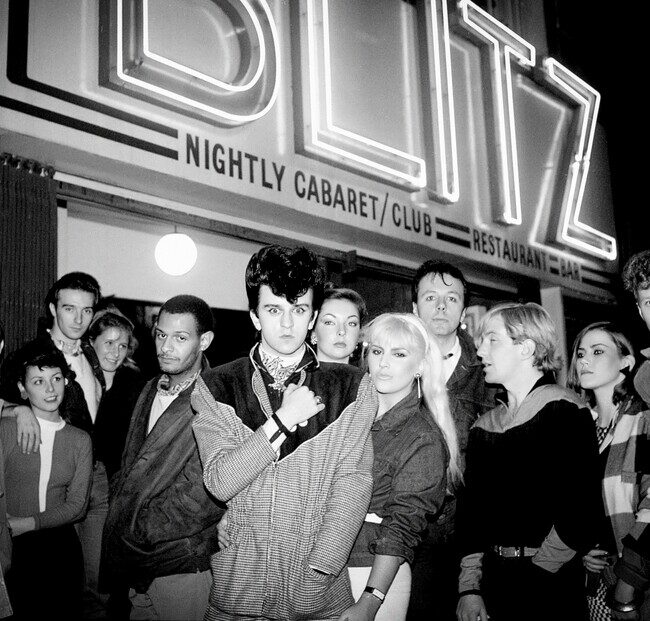
 Its all about the legendary Blitz club night that transformed 1980s London style, and generated a creative scene that had an enormous impact on popular culture in the decade that followed – from fashion and music, to film, art, and design. Behind a door in a Covent Garden side street, the Blitz club was the place where 1980s style began. Inspired by everything from David Bowie, the punk and soul scenes, to continental cinema and cabaret culture, the brightest young talents of their generation came together to revolutionise fashion, music and design, turning a niche club night into a launchpad for global superstardom.
The scene launched the careers of many stars, including chart-topping performers Spandau Ballet, Visage, Boy George and Marilyn as well as a long list of designers, artists, filmmakers and writers — from couture milliner Stephen Jones and Game of Thrones costume designer Michele Clapton, to DJ and fashion writer Princess Julia and BBC broadcaster Robert Elms.
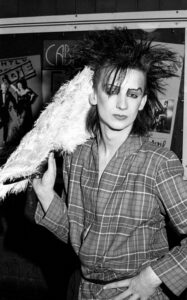 Now some forty years after its closure, visitors can revisit the trailblazing club’s history and atmosphere with a sensory extravaganza of music, flamboyant fashions, and pioneering art, film, and graphic design.
Developed in close collaboration with some of the leading ‘Blitz Kids’ who were there, the exhibition features over 250 items, ranging from clothing and accessories, design sketches, musical instruments, flyers, magazines, furniture, artworks, photography, vinyl records and rare film footage.
At the heart of the exhibition is a creative re-interpretation of the Blitz, complete with bar and dancefloor. The immersive design and production was created by Guildhall Production Studio, part of Guildhall School of Music & Drama, in collaboration with Digital Catapult, Southby Productions and Target3D – who combined to build a realistic ‘club’ including an avatar of resident DJ and co-founder Rusty Egan and newly remastered archival footage of one of Spandau Ballet’s earliest performances. The only band to play live at the Blitz night before going on to global stardom, Spandau were part of the club’s creative ecosystem, with other ‘Blitz Kids’ producing their stagewear and lighting design (Simon Withers) and their promotional graphics (Graham Smith).
